More than ever, and the reason is not nostalgia. AI did not make Markdown obsolete. It made Markdown the surface you deal with all day. ChatGPT, Claude and Gemini all format their answers in it. AI coding tools write READMEs and docs in it. Agent instruction files are Markdown documents, and prompt libraries across the industry are written in it.
Knowing the syntax means you can read, fix and reuse what a model gives you, instead of pasting a wall of asterisks into a document and hoping. It costs about thirty minutes with the guide, and it pays out every single day you work with these tools.
At a glance
| Format AI assistants reply in | Markdown. Headings, bold, lists, tables and fenced code |
|---|---|
| Where it is effectively required | READMEs, docs-as-code sites, model cards, agent instruction files |
| Learning cost | Around 30 minutes for everything you use in daily writing |
| Shelf life | Files from 2004 still open unchanged, and no vendor can deprecate it |
| What AI does not do for you | Reading, trimming and restructuring the output it hands back |
Markdown is the native language of LLM output
- Chat models reply in Markdown, so the answer you copy out is Markdown source.
- Prompts with headings and bullets get followed more closely than one long paragraph.
- READMEs, model cards, docs sites and agent instruction files are all Markdown.
- The format has no vendor, so nobody can retire it or put it behind a subscription.
What lands on your clipboard is Markdown
Ask any major AI chat tool a question and the answer comes back as Markdown. You get ## section headings, **bold** key terms, bulleted lists, fenced code blocks and sometimes tables. The chat window renders it prettily, but the text underneath is Markdown, and that is what you copy. Know the syntax and you can paste it anywhere, trim it, restructure it and publish it in minutes. Miss it and you are staring at a thicket of hashes you do not dare touch.
It works in the other direction too
Structure a prompt with headings, numbered steps and fenced examples and models follow it more closely. They were trained on oceans of well-structured Markdown, and the format signals hierarchy in a way plain paragraphs cannot. That is why system prompts, tool descriptions and agent instructions are almost all written in it.
Fluency now runs both ways
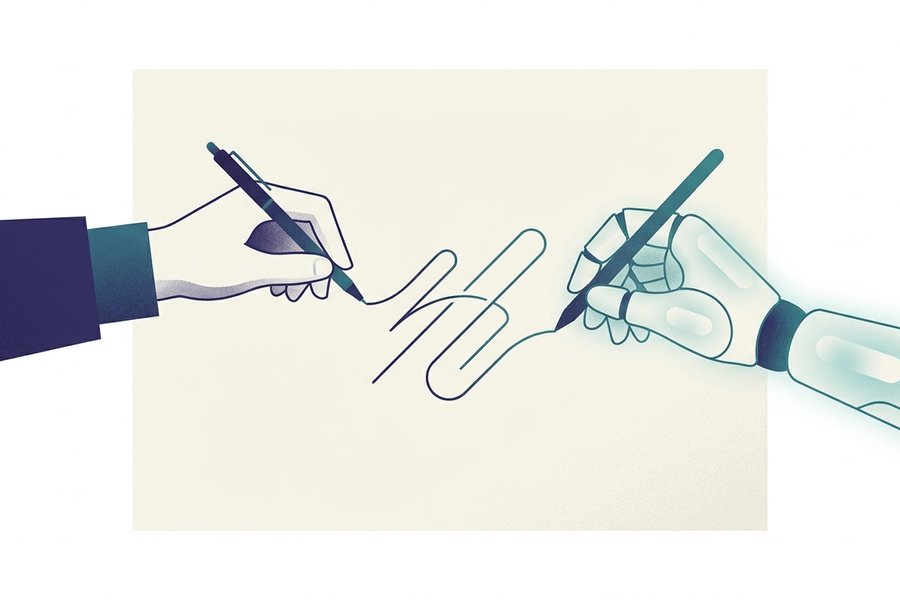
You read what the model writes, and you write what the model reads. Neither direction asks for more than the everyday syntax on the cheat sheet. That is a very small amount of knowledge sitting on top of a very large amount of daily use.
Where Markdown actually shows up in AI tooling
It is easy to underestimate how much of the AI stack is plain text documents. Here is what the format is doing inside tools you already use.
| Where | What Markdown does there | Why it matters to you |
|---|---|---|
| Chat replies from ChatGPT, Claude, Gemini | Headings, emphasis, lists, tables and code fences in the raw response | Copying an answer gives you syntax you can paste straight into an editor |
| Prompts and system instructions | Sections and numbered steps that signal structure to the model | Well-formed prompts get followed more closely than a wall of text |
| Agent instruction files | Project rules stored as a Markdown file in the repository | Editing one is editing plain text, with no interface in the way |
| README.md in every repository | The first thing a human or a model reads about a project | AI tools generate and update it, and you have to review the result |
| Model and dataset cards on Hugging Face | The documentation format for weights, licences and limitations | Evaluating a model means reading a Markdown document |
| Documentation sites: Docusaurus, MkDocs, Hugo | Every page is a .md source file under version control | Docs get reviewed diff by diff, exactly like code |
| RAG pipelines and knowledge bases | Source documents are converted to Markdown before chunking | Clean heading structure produces noticeably cleaner retrieval |
| Note apps with AI features: Notion, Obsidian | The storage or paste format behind the editor | Your notes stay portable instead of locked in one product |
Notice the pattern. In every row, the machine-readable part and the human-readable part are the same file. No rich-text format has that property. It is why the AI world converged on Markdown instead of inventing something new, and why the comparison with HTML still comes out the way it does.
Writing prompts the model reads well
The same request, structured
Here is the practical payoff of knowing the syntax. Compare a request written as one long paragraph with the same request laid out:
# Task
Rewrite the paragraph below for a general audience.

## Constraints
- Under 120 words
- No jargon
- Keep every number unchanged

## Input
> Our Q3 churn of 4.2% reflects a cohort-weighted
> adjustment applied after the billing migration.

## Output format
Return only the rewritten paragraph, in Markdown.
Why each element earns its place
- The
#and##headings split the instruction from the data. Mixing the two is the most common reason a model follows text that was meant as input. - The bulleted constraints are individually addressable, so a follow-up like "relax the second constraint" is unambiguous.
- The blockquote marks exactly where the input begins and ends.
- The output format section is what stops the model wrapping its answer in commentary.
None of this is advanced Markdown. It is headings, bullets and a blockquote, all learned in the first ten minutes with the cheat sheet. The gain comes from structure the model can see, not from clever wording.
Tip: When you want the source rather than the rendered answer, ask the model to return it inside a fenced code block. The chat window then shows the hashes and asterisks as plain text, and what you copy is already clean Markdown.
README culture and docs-as-code are not going anywhere
Every repository still opens with a README
The ecosystems growing fastest around AI are built on Markdown. Every GitHub repository leads with a README.md, and every AI coding assistant is expected to read and write them. Platforms such as Docusaurus, MkDocs, GitBook and Hugo keep their pages as Markdown files under version control. That docs-as-code workflow became standard for one reason: plain text diffs, merges and reviews exactly like source code.
The human layer is the one that matters
AI-specific tooling follows the same pattern. Model cards, agent config files, changelogs and architecture decision records are all Markdown documents. The more code machines generate, the more weight falls on the human-readable layer around it - The explanations, the decisions, the instructions. That layer is Markdown, and nobody has proposed anything better.
Learn the GitHub dialect first
The dialect worth knowing is GitHub Flavored Markdown, because GitHub, GitLab and most developer tools render it. Tables, task lists, strikethrough and automatic links come from it, and those are the constructs documentation actually uses.
A tiny investment with compounding returns
Do the arithmetic
The economics are hard to argue with. Markdown has perhaps a dozen constructs you use routinely, learnable in one sitting with the cheat sheet and the live-preview editor. Compare that with the hours most software demands before it is useful. Then look at where the skill gets used:
- Every chat with an AI assistant, in both directions.
- Every note in Notion, Obsidian or any modern notes app.
- Every comment on Reddit, Discord or Stack Overflow.
- Everything you touch on GitHub, starting with the README.
It does not go out of date
Markdown is also unusually durable. Files written in 2004 open perfectly today. The format has no vendor who can deprecate it, redesign the interface, or move it behind a subscription. Skills tied to one tool decay when that tool changes, and these days tools change monthly. A skill tied to plain text does not decay at all.
The scarce skill has shifted
One argument gets overlooked. As models write more of the first draft, the scarce human skill moves from producing text to judging and shaping it. Doing that quickly means being comfortable in the format the draft arrives in. Half an hour with the guide, or a week with our fastest way to learn it, is the whole cost of entry.
Related questions
Try the Editor
Open Editor